
Compressor Spare Parts Selection and Inventory Management
By Nick Li · August 10, 2026 · Technical Articles
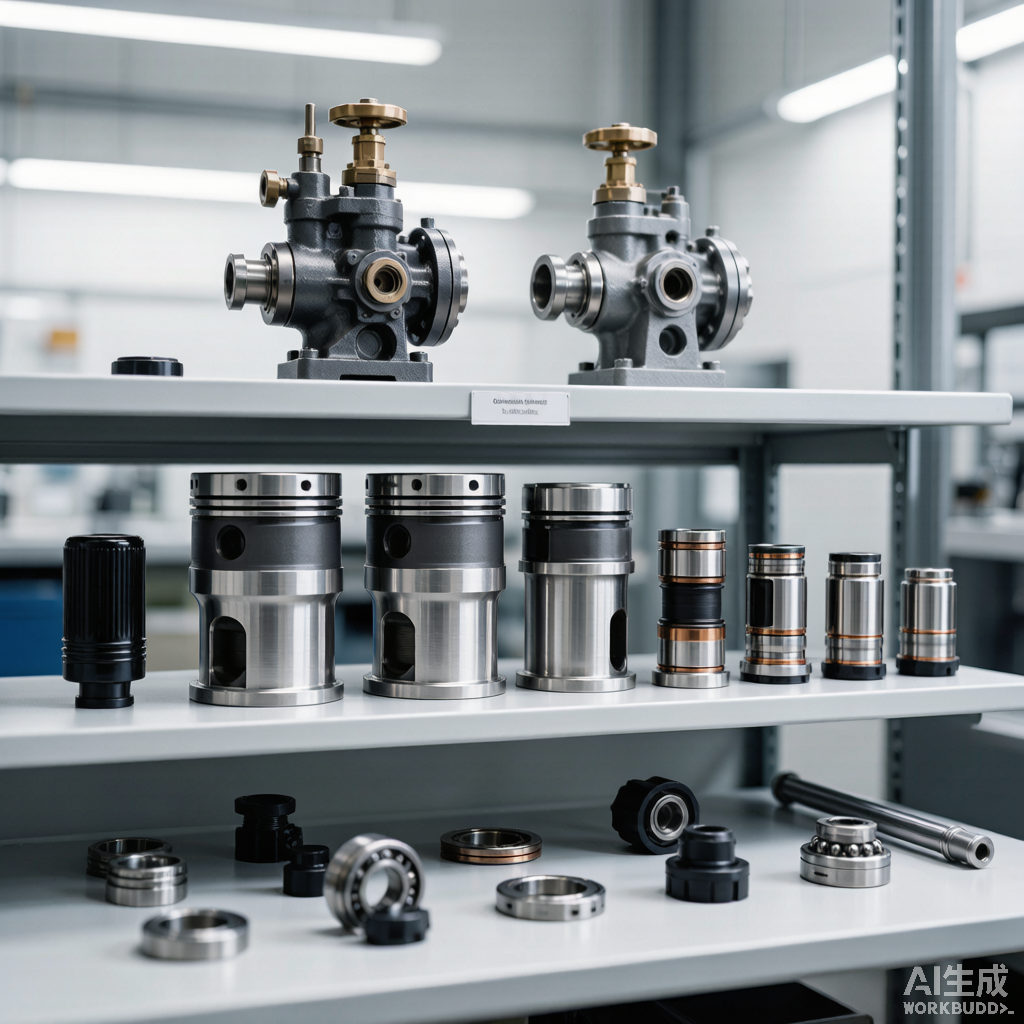
Spare parts management for industrial compressors is a critical function that directly impacts equipment availability, maintenance costs, and plant reliability. A well-structured spare parts strategy balances the cost of inventory against the risk of extended downtime. This article provides a comprehensive framework for selecting, stocking, and managing compressor spare parts.
1. Spare Parts Classification
Compressor spare parts should be classified based on criticality, lead time, and consumption pattern. This classification drives inventory decisions and ensures that resources are allocated efficiently.
| Category | Description | Examples | Stock Strategy |
|---|---|---|---|
| Critical (A) | Failure causes immediate shutdown, long lead time | Crankshaft, cylinder, frame | Always stock or have emergency purchase agreement |
| Essential (B) | Failure degrades performance, moderate lead time | Valves, piston rings, packing | Stock minimum quantity, reorder at safety level |
| Routine (C) | Consumable items, short lead time | Gaskets, O-rings, filters | Stock in economical quantities |
2. Valve Selection and Spare Strategy
Compressor valves are among the most frequently replaced components. Selecting the right valve type and maintaining an appropriate spare stock is essential for sustained reliability.
- Match valve type (plate, ring, poppet) to gas composition and operating conditions
- Specify valve materials compatible with process gas contaminants (H2S, CO2)
- Maintain one complete spare valve set per cylinder as minimum stock
- Track valve life cycles to identify recurring premature failures
- Consider upgraded valve designs during refurbishment for extended life
3. Piston and Rod Assembly Spares
The piston and rod assembly operates under cyclic loading and requires periodic refurbishment. Key spare components include piston rings, rider bands, piston rods, and crosshead pins.
| Component | Expected Life | Spare Quantity | Notes |
|---|---|---|---|
| Piston rings | 8,000-16,000 hours | 1 set per cylinder | Material matched to gas |
| Rider bands | 8,000-16,000 hours | 1 set per cylinder | Replace with rings |
| Piston rod | 40,000-60,000 hours | 1 per type | Monitor for fatigue |
| Crosshead pin | 40,000+ hours | 1 per frame | Inspect bushings |
| Connecting rod bolts | Each major overhaul | 1 set per rod | Single-use torque-to-yield |
4. Packing and Seal Spares
Packing assemblies seal the piston rod at the cylinder-to-crankcase interface. Packing ring wear is influenced by rod condition, lubrication quality, and gas composition.
- Stock two complete packing sets per compressor frame
- Select packing ring materials based on gas composition and temperature
- Maintain spare lantern rings and lubrication distribution components
- Monitor packing leakage rates to predict replacement timing
- Consider upgraded packing designs with PTFE or peek inserts for harsh service
Figure 1: Compressor spare parts organized for inventory management
5. Bearing and Lubrication System Spares
Main and crank pin bearings are critical for frame integrity. Bearing failure can cause catastrophic crankshaft damage within hours if not detected.
- Stock one set of main and crank pin bearings per frame
- Maintain spare oil pump, oil filter elements, and oil cooler gaskets
- Keep a minimum oil reserve equal to one full sump capacity
- Track bearing life based on operating hours and load severity
- Use OEM-specified bearing materials; avoid substitutions without engineering review
6. Inventory Management Best Practices
An effective inventory management system ensures parts availability while controlling costs. Modern computerized maintenance management systems (CMMS) provide real-time visibility into stock levels, consumption trends, and reorder triggers.
6.1 Key Performance Indicators
| KPI | Target | Measurement |
|---|---|---|
| Parts availability | > 95% | Stocked vs. demanded items |
| Inventory turnover | 1.5-2.5x per year | Cost of consumed / average value |
| Obsolete stock ratio | < 5% | Obsolete value / total value |
| Emergency purchase rate | < 10% | Emergency orders / total orders |
6.2 Reorder Point Calculation
The reorder point (ROP) should account for consumption rate, lead time, and a safety factor based on criticality:
- ROP = (Average daily consumption x Lead time in days) + Safety stock
- Safety stock for critical (A) items: 2x lead time consumption
- Safety stock for essential (B) items: 1x lead time consumption
- Safety stock for routine (C) items: 0.5x lead time consumption
- Review and adjust ROP annually based on actual consumption data
7. Vendor Relationship and Long-Term Supply Agreements
Establishing strategic partnerships with compressor OEMs and authorized parts suppliers ensures access to genuine components, technical support, and priority delivery during emergencies.
- Negotiate long-term supply agreements for critical spare parts
- Include guaranteed response time and priority manufacturing clauses
- Request vendor-consignment stock for high-value, low-turnover items
- Participate in OEM reliability improvement programs and field retrofits
- Maintain contact with multiple qualified suppliers for competitive pricing
Source: Compressor Technology Editorial Reference