
Metal C-Ring Seals: The Preferred Choice for Ultra-High Pressure and Ultra-High Vacuum Sealing
By Nick Li · August 10, 2026 · Technical Articles
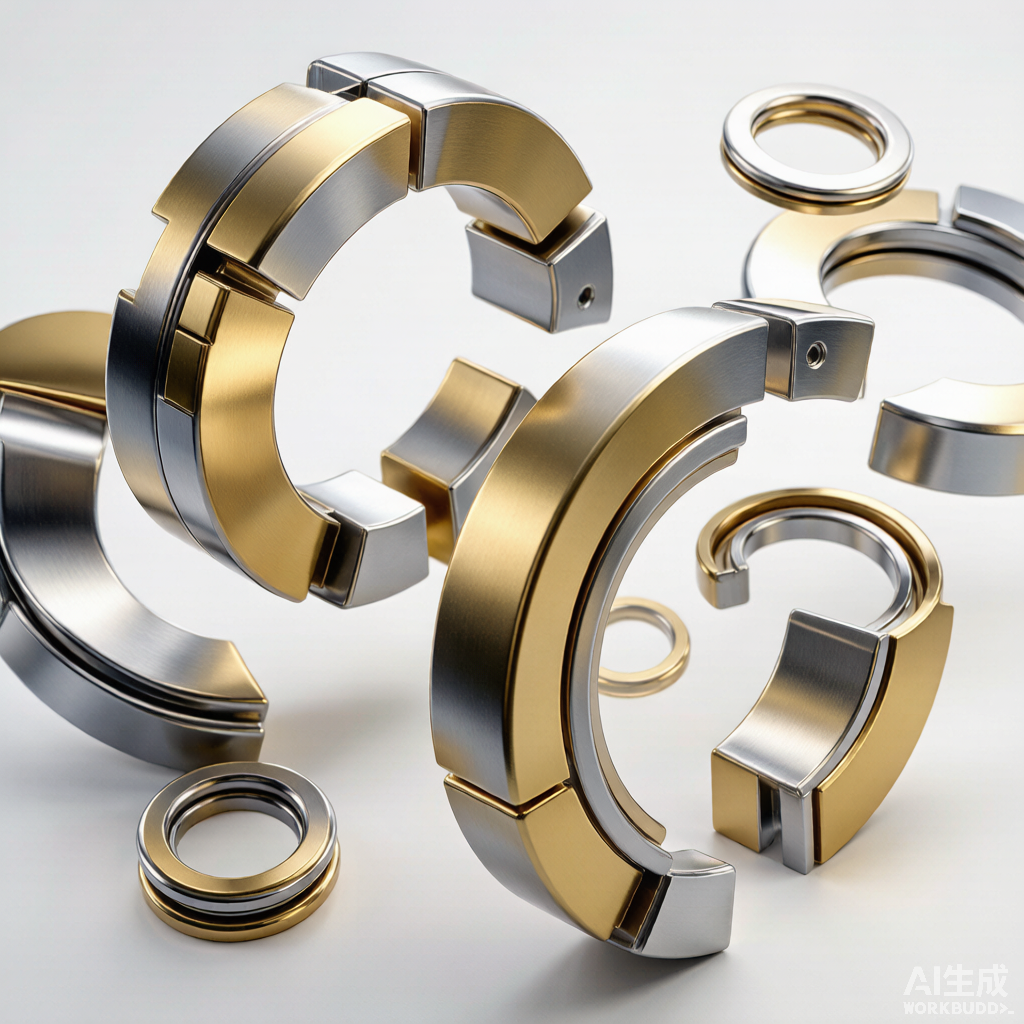
Figure 1: Metal C-ring seals for ultra-high pressure and ultra-high vacuum applications
The Metal C-Ring Seal (Metal C-Ring) was specifically developed to overcome these challenges. With its unique structural design and all-metal construction, it has become one of the key sealing solutions for ensuring the long-term reliability of critical equipment.
I. Structural Design and Working Principle of Metal C-Ring Seals
Metal C-Ring seals feature a “C”-shaped cross-section, with the opening typically oriented toward the side with higher media pressure. This configuration creates an efficient self-energizing sealing mechanism.
1. Initial Mechanical Sealing (Springback Force)
During installation, the C-ring is compressed between two mating sealing surfaces. The elastic deformation generated by compression produces a continuous springback force, which is converted into an initial contact pressure against the sealing surfaces.
This preload compensates for microscopic surface irregularities and establishes the primary seal before system pressurization.
2. Pressure Self-Energizing Mechanism
The pressure-assisted sealing effect is the most significant advantage of Metal C-Ring seals.
When high-pressure media enter the cavity inside the C-ring, the internal pressure acts on the inner surface of the ring, forcing the opening to expand outward. As a result, the sealing lips are pressed more firmly against the upper and lower sealing surfaces.
Unlike conventional static seals, the sealing contact pressure increases proportionally with the system pressure, making Metal C-Ring seals particularly suitable for ultra-high-pressure applications.
The pressure transmission path can be summarized as follows:
- Flange Load: Initial mechanical compression applies the required preload to the sealing surfaces.
- Media Inlet: High-pressure fluid enters the internal cavity through the opening.
- Pressure Expansion: Internal pressure pushes the C-ring outward, increasing the sealing force on both contact surfaces and achieving higher sealing performance as pressure rises.
II. Core Materials and Surface Enhancement Technologies
The outstanding performance of Metal C-Ring seals depends on the combination of high-strength base materials and specialized surface coatings.
1. Base Materials: High Strength and Excellent Elastic Recovery
The substrate must maintain excellent strength and elastic recovery under elevated temperatures and high-pressure conditions.
Typical materials include:
- Inconel 718 / X-750: Nickel-based superalloys that maintain excellent elasticity and oxidation resistance at temperatures between 600°C and 800°C, making them the preferred materials for aerospace and nuclear industries.
- Waspaloy / Rene 41: Designed for even more demanding environments beyond the performance range of Inconel alloys.
- 304 / 316 Stainless Steel: Suitable for medium-temperature applications (below approximately 400°C) and environments with lower corrosion requirements.
2. Surface Plating and Coatings
Since Metal C-Ring seals rely on metal-to-metal contact, dry friction between sealing surfaces is relatively high. Surface treatments are therefore applied to reduce friction, improve sealing performance, and enhance sealing reliability.
During installation, the coating undergoes slight plastic deformation, filling microscopic surface imperfections such as machining marks and scratches.
| Surface Treatment | Temperature Range | Typical Features and Applications |
|---|---|---|
| Silver Plating | -270°C to +650°C | The most widely used high-performance coating. Excellent ductility and cold-flow capability, ideal for cryogenic applications. |
| Copper Plating | -196°C to +400°C | Economical with excellent ductility, commonly used in conventional vacuum systems and pressure vessels. |
| Nickel Plating | -270°C to +750°C | Outstanding corrosion resistance and high-temperature performance, widely used in highly corrosive and oxidizing environments. |
| PTFE Coating | -200°C to +260°C | Suitable for ultra-high vacuum systems and semiconductor manufacturing processes where metal ion contamination must be minimized. |
III. Comparison Between Metal C-Ring Seals and Metal O-Rings
Among all-metal sealing technologies, Metal C-Rings are often compared with Metal O-Rings.
The primary differences include:
- Elastic Recovery: Metal O-Rings have a fully enclosed circular cross-section with a larger contact area but relatively lower elastic recovery. In contrast, the open “C”-shaped geometry provides significantly greater springback force, enabling better compensation for thermal deformation and dimensional tolerances.
- Load Requirements: Metal C-Rings require higher initial flange loading than Metal O-Rings. Consequently, they are typically used in equipment with rigid flanges and high-strength bolted connections capable of providing sufficient preload.
IV. Key Design and Installation Guidelines
1. Opening Orientation
The installation direction of a Metal C-Ring depends on the pressure source.
- Internal Pressure: The opening of the C-Ring should face outward (toward the pressure medium), allowing the internal pressure to enter the cavity and activate the self-energizing sealing effect.
- External Pressure / Vacuum: The opening should face inward. Under external pressure or vacuum conditions, atmospheric pressure or process pressure acts through the opening to generate the required sealing force.
2. Groove Design and Compression Control
Metal C-Rings are compression-limited seals, requiring precise groove dimensions or mechanical stop features to control compression during installation.
Typical design requirements include:
- Compression Ratio: Generally 15% to 20% of the ring’s original cross-sectional height.
- Surface Finish: The flange sealing surface should typically have a roughness of Ra 0.4–0.8 μm. For ultra-high vacuum applications or highly permeable gases such as hydrogen and helium, precision grinding or lapping is recommended. The machining marks should be perpendicular to the opening direction of the C-Ring (radial orientation) to minimize potential leakage paths.
V. Typical Industrial Applications
1. Aerospace and Aero Engines
Used in fuel injectors, combustor section joints, turbine gas paths, and other high-temperature, high-pressure sealing locations.
2. Semiconductor Manufacturing Equipment
Widely used in ALD (Atomic Layer Deposition), CVD (Chemical Vapor Deposition) systems, and ultra-high vacuum chambers where extremely low leakage rates and contamination control are essential.
3. Nuclear Power Equipment
Applied in reactor pressure vessel components, primary circuit systems, and other critical sealing locations requiring long-term reliability under high temperature, high pressure, and radiation.
4. High-Pressure Hydraulic and Petrochemical Systems
Suitable for ultra-high-pressure valves, deep-sea drilling equipment, pressure vessels, compressors, and other systems operating under severe pressure conditions.
VI. Conclusion
Metal C-Ring seals combine an innovative structural design with a pressure self-energizing mechanism, effectively overcoming the performance limitations of conventional elastomer seals in extreme environments.
With their excellent resilience, outstanding pressure resistance, and exceptional durability, they have become the preferred sealing solution for demanding applications involving high temperature, ultra-high pressure, cryogenic conditions, and ultra-high vacuum.
As modern industries continue to push the limits of operating conditions, Metal C-Ring technology will remain one of the most reliable sealing solutions for mission-critical equipment.
Source: DLSEALS | www.dlseals.com