
Metal Face Seal Technology VCR for High Vacuum and High Pressure
By Nick Li · August 10, 2026 · Technical Articles
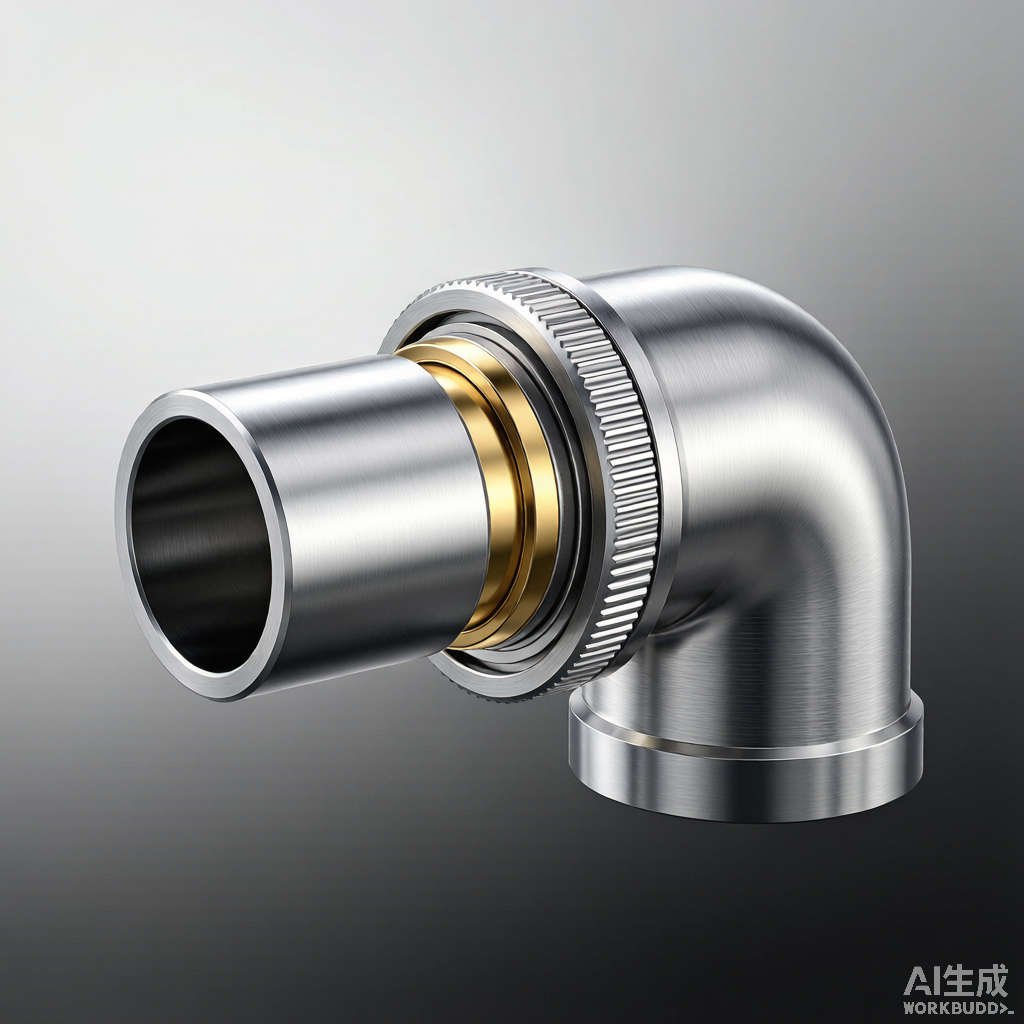
The Vacuum Coupling Radius (VCR) metal face seal is the gold standard connection technology for applications requiring ultra-high purity, high vacuum, or high pressure integrity. Unlike elastomeric seals that degrade, permeate, and outgas, VCR connections use a deformable metal gasket between precision-machined sealing surfaces, providing a leak-tight, chemically inert, and temperature-resistant seal. This article examines VCR technology in detail, from design principles to application guidance.
1. VCR Seal Design Principles
The VCR connection consists of two fittings with flat, precision-machined sealing surfaces and a metal gasket that deforms under compression to create a leak-tight seal. The geometry of the sealing surfaces and gasket determines the seal’s pressure-holding capability and leak rate.
- Sealing surfaces: precision-lapped, Ra < 4 microinch (0.10 micron)
- Gasket geometry: flat or shaped, with defined yield strength for controlled deformation
- Two-ferrule thread: standard compression thread drives the sealing surfaces together
- Seal mechanism: plastic deformation of gasket fills microscopic surface irregularities
- No elastomers: eliminates permeation, outgassing, and chemical degradation issues
Figure 1: VCR metal face seal cross-section showing gasket and sealing surfaces
2. Gasket Types and Materials
The metal gasket is the critical sealing element. Its material and geometry must match the application’s pressure, temperature, and chemical compatibility requirements. Gasket selection directly determines the connection’s performance envelope.
| Gasket Type | Material | Pressure Rating | Temperature Range |
|---|---|---|---|
| Standard flat | 316L SS | Up to 10000 psig (689 bar) | -270 to 540 C |
| Retainer (metal) | 316L SS with retainer | Up to 10000 psig | -270 to 540 C |
| Plated | Gold-plated nickel | Up to 10000 psig | -270 to 200 C |
| Silver-plated | Silver on 316L | Up to 10000 psig | -270 to 600 C |
| Copper gasket | Oxygen-free Cu | Up to 5000 psig | -200 to 400 C |
| Nickel gasket | Pure Ni | Up to 8000 psig | -270 to 600 C |
3. Leak Performance Comparison
VCR metal face seals provide dramatically lower leak rates compared to elastomeric-sealed connections. This is critical for applications involving hazardous gases, ultra-high vacuum, or processes sensitive to trace contamination.
| Connection Type | Helium Leak Rate (atm cc/sec) | Permeation |
|---|---|---|
| VCR metal face seal | < 10^-9 | None (no elastomers) |
| Twin ferrule compression | < 10^-7 (with metal-to-metal seat) | Minimal |
| O-ring face seal | 10^-6 to 10^-5 | Significant (elastomer permeation) |
| threaded NPT with tape | 10^-3 to 10^-2 | Moderate (through sealant) |
4. Application Areas
VCR connections are used across a wide range of industries and applications where seal integrity is paramount. The versatility of the VCR design makes it suitable from deep cryogenic to high-temperature service.
- Semiconductor: UHP gas delivery systems (316L VIM/VAR, EP finish, Ra < 3 microinch)
- Aerospace: propellant and pressurant gas systems (lightweight, high reliability)
- Analytical instruments: mass spectrometry and gas chromatography (zero background)
- Fusion research: tritium and deuterium handling (permeation barrier, low retention)
- Hydrogen infrastructure: high-pressure H2 (700 bar, embrittlement-resistant materials)
- Cryogenics: liquid helium and nitrogen (ductile at cryogenic temperatures)
5. Assembly Procedure and Best Practices
Proper VCR assembly is critical for achieving the specified leak rate. Over-tightening damages the gasket and sealing surfaces, while under-tightening results in inadequate gasket deformation and potential leaks.
- Inspect sealing surfaces for scratches, dents, or contamination before assembly
- Use a new gasket for every connection – never reuse a deformed gasket
- Insert gasket between fittings, ensure it is centered and seated
- Tighten nut finger-tight, then use wrench for specified turn (typically 1/8 to 1/4 turn)
- Do not exceed specified torque – over-tightening causes gasket extrusion and surface damage
- For UHP applications: assemble in cleanroom environment with cleanroom gloves
6. High Vacuum Applications
In ultra-high vacuum (UHV) systems, VCR connections enable pressures below 10^-9 Torr. The absence of elastomers eliminates virtual leaks (trapped gas pockets) and outgassing that would prevent achieving UHV conditions.
| Vacuum Range | Pressure (Torr) | VCR Role |
|---|---|---|
| Rough vacuum | 10^-3 to 760 | General connection, adequate seal |
| High vacuum (HV) | 10^-6 to 10^-3 | Standard VCR with 316L gasket |
| Ultra-high vacuum (UHV) | 10^-9 to 10^-6 | VCR with gold-plated gasket, baked |
| Extreme UHV (XHV) | < 10^-9 | Conflat flange (copper gasket) preferred |
7. Maintenance and Reassembly
VCR connections are designed for repeated make-and-break cycles. However, the metal gasket must be replaced after each disconnection. With proper care, VCR sealing surfaces can provide hundreds of reliable reconnection cycles.
- Always replace gasket after disconnection – deformed gasket cannot reseal
- Inspect sealing surfaces with magnification after disconnection
- Light scratches (< 0.0002 inch deep) can be lapped out; deeper damage requires replacement
- Clean sealing surfaces with lint-free wipes and appropriate solvent before reassembly
- Document torque values and reassembly dates for traceability in critical applications
- Track connection cycle count; replace fitting body after manufacturer-specified cycles
Source: FITOK Technical Reference