
PTFE Composite Seal Selection Guide: Common Modified Fillers and Their Performance Advantages
By Nick Li · August 10, 2026 · Technical Articles
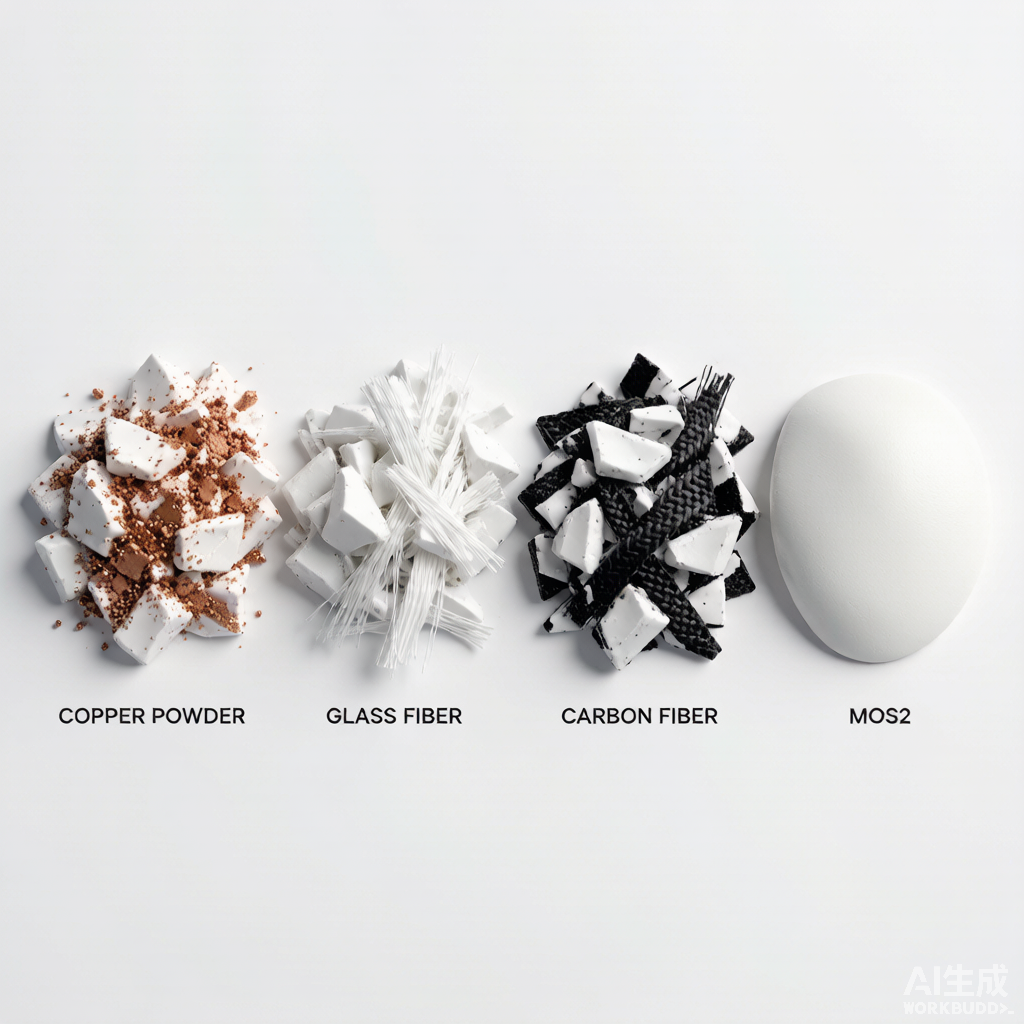
Figure 1: PTFE composite seals with various modified fillers (copper, glass fiber, carbon, MoS2)
1. Introduction: Why Does PTFE Require Modification?
Virgin polytetrafluoroethylene (Virgin PTFE, commonly known as the “King of Plastics”) features an extremely low friction coefficient (as low as 0.04) and near-universal chemical corrosion resistance, making it an ideal sealing substrate. However, virgin PTFE suffers from three fatal shortcomings in industrial applications: low hardness, poor wear resistance, and high susceptibility to cold flow creep (creep deformation) under continuous pressure.
To satisfy the demanding requirements of complex operating conditions such as high-pressure hydraulics, high-speed rotation, oil-free lubrication, and strong corrosion, the industry typically incorporates various functional fillers into the PTFE matrix to produce Filled PTFE composites. Through modification, the compressive strength and wear life of the seal ring can be increased by tens to thousands of times.
2. Core PTFE Composite Sealing Materials and Advantage Analysis
Based on different additive components, modified PTFE seals have formed several mainstream material systems, each with distinct performance characteristics:
Glass Fiber-Filled PTFE
Typically contains 15% to 25% glass fiber.
- Core Advantages:
Extrusion and Creep Resistance: Glass fiber significantly improves the mechanical strength and rigidity of PTFE, effectively preventing the seal ring from extruding into mating gaps under high pressure.
Excellent Chemical Stability: Retains most of virgin PTFE’s corrosion resistance (except against strong alkalis).
Good Electrical Insulation: Suitable for industrial sealing applications requiring electrical insulation.
- Limitations: The high hardness of glass fiber can cause wear on softer metallic mating surfaces (such as aluminum alloys or brass).
- Typical Applications: Hydraulic cylinder seals, pneumatic Variseals, and high-pressure industrial valves.
Bronze-Filled PTFE
Typically contains 40% to 60% bronze powder.
- Core Advantages:
Ultra-High Thermal Conductivity: Bronze powder rapidly dissipates frictional heat, preventing seal damage caused by localized overheating.
Exceptional Load Bearing and Wear Resistance: Offers the highest compressive strength and hardness among modified PTFE materials, making it highly resistant to heavy loads.
Superior Dynamic Friction Performance: Performs exceptionally well during reciprocating motion in high-speed, high-pressure environments.
- Limitations: Poor resistance to strong acids; relatively high material density.
- Typical Applications: Hydraulic cylinder Glyd Rings, Step Seals for heavy-duty machinery, and heavy-load rotary seals.
Carbon/Carbon Fiber-Filled PTFE
Typically contains 15% to 25% carbon powder or carbon fiber.
- Core Advantages:
High Wear Resistance with Low Friction: Carbon fiber imparts high wear resistance while maintaining a low dynamic friction coefficient.
Broad Chemical Compatibility: Resists strong alkalis and most fluorides, offering better corrosion resistance than glass fiber or bronze filler.
Dry-Run Capability and Antistatic Properties: Possesses self-lubricating properties suitable for oil-free dry-running conditions, alongside conductive/antistatic performance.
- Limitations: Lower elongation rate and higher material cost.
- Typical Applications: Non-lubricated compressor piston rings, chemical corrosion-resistant pumps and valves, and pneumatic seals.
Graphite-Filled PTFE
Typically contains 10% to 15% high-purity graphite.
- Core Advantages:
Superior Self-Lubrication: The layered structure of graphite significantly reduces initial breakaway friction, eliminating stick-slip behavior during low-speed motion.
Good Heat Dissipation: Helps dissipate frictional heat, extending service life in high-speed rotation.
Mating Surface Protection: Extremely gentle on mating metal shafts, making it a mild modification material.
- Limitations: Graphite modification alone does not increase overall compressive strength as effectively as bronze or glass fiber.
- Typical Applications: High-speed rotary seals, vacuum equipment seals, and water pump shaft seals (often blended with carbon fiber).
Poly-p-hydroxybenzoate (Ekonol) / Aramid Modified PTFE
Typically contains 10% to 20% Ekonol or aramid fiber.
- Core Advantages:
Zero Shaft Wear: Uses organic polymers for modification, eliminating any risk of scratching softer metallic mating surfaces such as aluminum or stainless steel.
High Temperature Resistance and Hygiene Standards: Demonstrates extremely low wear at elevated temperatures and meets food and pharmaceutical contact standards.
- Typical Applications: Food and pharmaceutical processing machinery, stainless steel valves, and aluminum cylinders.
3. Comprehensive Performance Comparison of PTFE Composite Seal Materials
| Material Type | Typical Filler Ratio | Core Performance Advantages | Selection Cautions / Limitations | Recommended Applications |
|---|---|---|---|---|
| Glass Fiber Filled | 15% – 25% Glass Fiber | High extrusion/creep resistance, cost-effective | Unsuitable for strong alkalis or soft metal shafts | High-pressure hydraulic cylinders, general industrial valves |
| Bronze Filled | 40% – 60% Bronze Powder | Excellent thermal conductivity, high load capacity, ultra-wear-resistant | Unsuitable for strong acid environments; heavy weight | Heavy-duty machinery hydraulics, Step Seals |
| Carbon Fiber Filled | 15% – 25% Carbon Fiber/Powder | High corrosion resistance, dry-run capable, antistatic | Lower material elongation, higher cost | Chemical corrosion pumps/valves, oil-free compressors |
| Graphite Filled | 10% – 15% Graphite | Extremely low friction, self-lubricating, protects mating surface | Lower compressive strength enhancement | High-speed rotary seals, vacuum and pump seals |
| Ekonol Modified | 10% – 20% Ekonol | Will not scratch stainless steel/aluminum shafts, hygienic | Higher material cost | Food/pharma equipment, stainless steel valves |
4. Key Selection Principles for Engineering Applications
Selection Based on Chemical Medium: If the medium is acidic, avoid bronze filler; if alkaline, avoid glass fiber, preferring carbon fiber modification instead.
Selection Based on Mating Shaft Hardness: For softer mating shafts (aluminum, brass, or unhardened stainless steel), prioritize graphite, Ekonol, or carbon fiber to prevent surface scoring caused by harder glass fibers.
Selection Based on Motion and Load Conditions: Use bronze fillers for high-pressure, heavy-load reciprocating applications. Choose graphite or carbon fiber for high-frequency start-stop or dry-running conditions.
5. Conclusion
By integrating various functional fillers, PTFE composites successfully overcome the inherent weaknesses of virgin polytetrafluoroethylene, such as creep and poor wear resistance. This creates a versatile portfolio of seal products tailored for high pressure, high speed, severe corrosion, and oil-free lubrication.
In engineering design and maintenance, there is no single “best” filler material. Optimal service life and reliable system performance can only be achieved by matching the appropriate material properties with specific working parameters, including operating pressure, sliding velocity, chemical media, and mating surface hardness.
Source: DLSEALS | www.dlseals.com