
Tube Fitting Technology and Selection Guide for Semiconductor Applications
By Nick Li · August 10, 2026 · Technical Articles
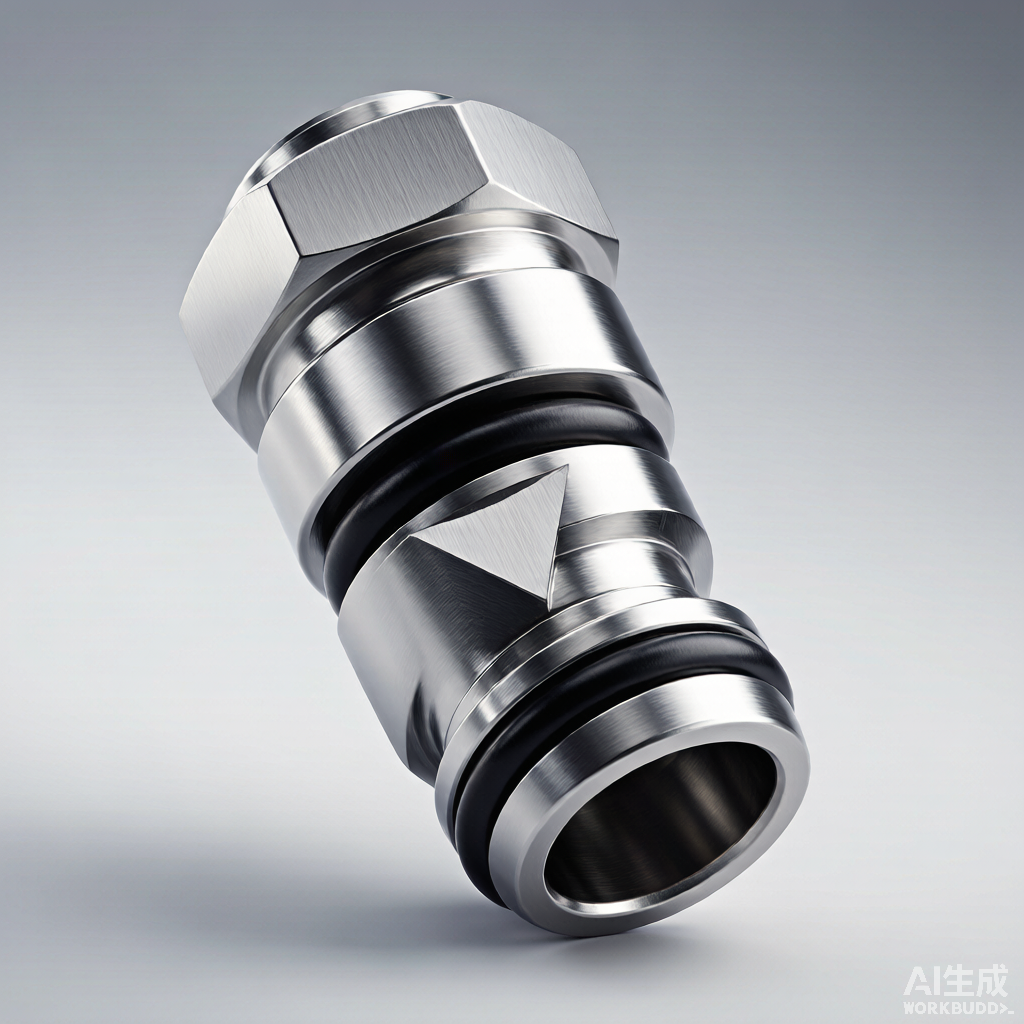
Tube fittings are fundamental components in fluid and gas delivery systems across semiconductor, hydrogen energy, oil and gas, chemical processing, and power generation industries. The integrity of these connections directly impacts system safety, purity, and reliability. This article provides a comprehensive guide to tube fitting technology, selection criteria, and best practices for high-performance applications.
1. Twin Ferrule Compression Fitting Design
The twin ferrule compression fitting is the industry standard for metal-to-metal sealing in high-purity and high-pressure applications. Its design consists of four primary components: body, front ferrule, back ferrule, and nut. The two-stage gripping and sealing mechanism provides superior vibration resistance and leak-free performance.
- Front ferrule: creates the primary seal against the fitting body and tube
- Back ferrule: provides mechanical grip on the tube, resisting push-out forces
- Body: precision-machined with hardened threads and seat surfaces
- Nut: drives the ferrules forward during assembly to form the seal
- Metal-to-metal seal: no elastomers, enabling high temperature and high purity service
2. Material Selection
Material selection depends on process fluid compatibility, temperature range, pressure rating, and purity requirements. The most common materials and their applications are summarized below.
| Material | Grade | Typical Application | Max Pressure |
|---|---|---|---|
| 316 Stainless Steel | ASTM A276 316 | General purpose, CDA, inert gas | 6000 psig (414 bar) |
| 316L Stainless Steel | ASTM A276 316L | UHP semiconductor, low carbon weld | 6000 psig (414 bar) |
| Super Duplex | UNS S32750 (2507) | Sour gas, chloride service (NACE) | 10000 psig (689 bar) |
| Alloy 625 | UNS N06625 | Extreme corrosion, high temp | 6000 psig (414 bar) |
| Brass | C36000 | Low pressure, non-corrosive gas | 3000 psig (207 bar) |
3. Surface Finish Specifications
For ultra-high-purity (UHP) applications, surface finish directly affects particle generation, moisture entrapment, and outgassing performance. Multiple finish levels are available to meet varying purity requirements.
| Finish Type | Ra (microinch) | Ra (micrometer) | Application |
|---|---|---|---|
| Mechanical Polish (MP) | 10-15 | 0.25-0.38 | General industrial |
| Electropolish (EP) | 3-5 | 0.08-0.13 | Semiconductor UHP |
| Bright Anneal (BA) | 5-7 | 0.13-0.18 | Clean gas distribution |
| EP + BA combined | 2-3 | 0.05-0.08 | Sub-10nm semiconductor |
Figure 1: Twin ferrule compression fitting cross-section showing metal-to-metal seal
4. Assembly Best Practices
Proper assembly is critical for achieving leak-free performance. Even the highest quality fitting will fail if assembled incorrectly. Follow these standardized procedures for consistent results.
- Cut tubing square using a tube cutter or fine-tooth hacksaw
- Deburr tube end inside and outside to prevent ferrule damage
- Insert tube until it bottoms in fitting body – never pull back
- Tighten nut finger-tight, then wrench-turn 1-1/4 turns for 1/4 inch and smaller
- For 5/16 inch and larger, tighten 1-1/4 to 1-1/2 turns per manufacturer chart
5. Thread Types and Compatibility
Understanding thread types is essential for proper fitting selection and system assembly. Mismatched threads can cause leaks, galling, and potential safety hazards.
| Thread Type | Standard | Seal Method | Common Region |
|---|---|---|---|
| NPT | ANSI B1.20.1 | Taper thread + sealant | North America |
| BSPP | ISO 228-1 | Parallel thread + face seal | Europe/Asia |
| BSPT | BS 21 | Taper thread + sealant | Europe/Asia |
| Metric | ISO 261 | Parallel thread + seal | Global industrial |
6. Leak Testing and Verification
After assembly, leak testing verifies connection integrity. The test method depends on the application’s leakage rate requirements and process gas characteristics.
- Bubble test: detect leaks > 10^-4 std cc/sec for general applications
- Helium leak test: detect leaks down to 10^-9 std cc/sec for UHP service
- Pressure decay test: system-level verification for multi-connection systems
- Helium mass spectrometer: most sensitive, for semiconductor gas systems
- Perform leak test at operating pressure and temperature for accurate results
7. Standards and Compliance
Tube fittings must meet industry standards that define design, testing, and quality requirements. Compliance with these standards ensures interchangeability and reliable performance.
- SEMI F1: specification for fitting materials for UHP gas distribution
- ASME B31.3: process piping design and fabrication requirements
- NACE MR0175/ISO 15156: material requirements for sour gas service
- CGA V-1: cylinder valve outlet connection standards
- FDA 21 CFR: material compliance for pharmaceutical and biotech applications
Source: FITOK Technical Reference